A slab leak is a leak in a water line buried under or inside a home's concrete foundation. Surprise is overwhelmingly slab-on-grade construction, so it is a real possibility in most homes here. The tricky part is that water from a slab leak often goes down into the soil rather than up into the house, so there may be no puddle at all.
This guide covers the signs to watch for and two simple tests you can run yourself to confirm whether water is escaping, and whether it is on the hot or cold side.
Why slab leaks happen
Water lines that run under or through a slab can wear where they touch concrete or gravel. The IPC requires water pipe that runs under or through concrete to be protected against exactly this kind of wear. Hot water lines leak more often because they expand and contract each time hot water runs, and that movement rubs the pipe against whatever surrounds it. Over years, a small worn spot becomes a pinhole.
Soil movement, high water pressure, and water chemistry can play a part too. Not every home routes water under the slab. Many newer homes run supply lines overhead through the attic instead, which moves the risk rather than removing it.
The signs
- A warm or hot spot on the floor, often on tile, where a hot water line runs underneath.
- The sound of running or hissing water when every fixture is off.
- A water bill that rises with no change in how you use water.
- The water heater running more than usual, because it keeps refilling with cold water.
- Damp carpet, lifting flooring, or new cracks in tile with no plumbing directly above.
- Moisture at the edge of the slab, such as along the garage floor or at an exterior wall.
- Lower water pressure at fixtures than you are used to.
Any one of these can have another cause. Two or three together are worth testing for.
Test one: is water escaping at all?
- Shut every tap, shower, and water-using appliance.
- Switch off the sprinkler controller and the pool autofill.
- Check that the softener is idle and no toilet tank is filling.
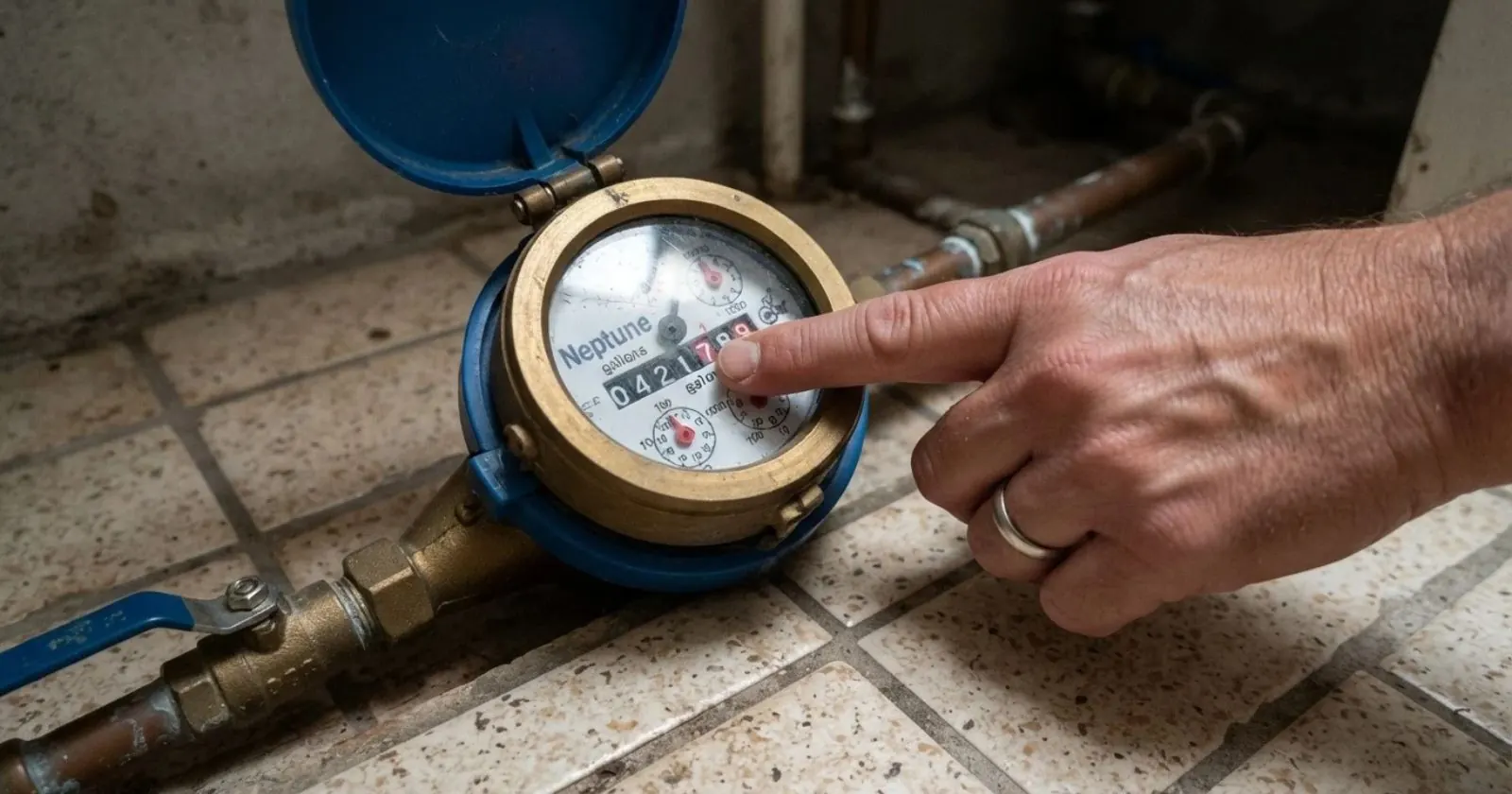
- Locate the meter, normally in a ground box by the street, and find the small leak dial on its face.
- Watch that dial closely for a few minutes.
If the indicator does not move, water is not escaping, and the problem is probably elsewhere. If it moves, water is going somewhere. The next step is to find out where.
Test two: inside or outside?
With everything still off, close the main shutoff valve on the house. If the meter's leak indicator stops, the leak is inside the house, which includes the slab. If it keeps moving, the leak is on the buried pipe from the meter to your house, which is a different repair.
Test three: hot side or cold side?
Open the house main again. Now close only the cold supply valve above the water heater. It feeds the tank, so closing it stops all flow into the hot water side of the house.
Watch the meter. If the leak indicator stops with the water heater valve closed, the leak is on the hot side. If it keeps moving, the leak is on the cold side. That result, along with any warm spots on the floor, narrows the search a great deal.
| What the meter does | What it means |
|---|---|
| Does not move with everything off. | No active leak through the meter. |
| Moves, stops when house main is closed. | Leak is inside the house or under the slab. |
| Keeps moving with house main closed. | Leak is on the service line outside. |
| Stops when water heater cold valve is closed. | Leak is on the hot water side. |
| Keeps moving with water heater valve closed. | Leak is on the cold water side. |
If you find a hot-side leak, keep the water heater's cold valve closed and turn the heater to pilot or off until the repair. That stops the heater from running constantly to replace escaping hot water.
What happens next
Once you know a leak exists and which side it is on, a plumber uses acoustic listening equipment, thermal imaging, and line isolation to pinpoint the exact spot before anything is opened. The goal is one small, accurate opening, or no opening at all.
There are two main repair paths. A spot repair opens the slab at the leak, fixes the pipe, and patches the concrete. A reroute runs a new line through the walls or attic and abandons the leaking section under the slab, which leaves the floor untouched. Our slab leak detection and repair page explains how to choose between them.
One leak or a pattern?
A single slab leak in a home that has never had one is usually a spot repair or a short reroute. A second or third leak is a different story. Repeated leaks in the same system suggest the buried piping is wearing out along its length, and at that point repiping the home is often more economical than chasing each new pinhole.
Insurance
Many homeowner policies help with the cost of accessing a slab leak and repairing resulting water damage, but they often exclude the pipe repair itself. Policies vary widely. Take photos, keep the detection report, and call your insurer early.
What happens if you wait
A slab leak rarely fixes itself. Water keeps flowing into the soil under the house, and the bill keeps climbing. If it is a hot water line, the water heater runs constantly to replace what escapes, which adds to the energy bill as well.
Over time, moisture can work its way up through the slab into flooring. Wood and laminate may cup or lift, carpet pad can stay damp, and trapped moisture raises the risk of mold along baseboards. Soil that stays saturated can also shift beneath the foundation. None of this happens overnight, but all of it gets more expensive the longer the leak runs.
If your supply lines run through the attic
Some newer homes in Surprise route most water lines overhead rather than under the concrete. In those homes, the same tests still work, but the warm-floor sign is replaced by ceiling stains, often after a hot stretch that stresses fittings in the attic. If the meter test shows a leak and the floors are cool, look up.
The same tests work in the slab-built subdivisions of El Mirage, where many homes date from the same 2000s building boom.
What to do: the quick checklist
- Notice a warm floor, hissing sound, or rising bill.
- Turn everything off and watch the meter.
- Close the house main to see if the leak is inside.
- Close the water heater's cold valve to see if it is on the hot side.
- If hot, keep that valve closed and the heater off.
- Call for pinpoint detection before anything is opened.
These tests take about 15 minutes and cost nothing. They turn a vague worry into specific information, which makes the repair faster and keeps it smaller.
Need a plumber in Surprise?
Think you have a slab leak? Call and we will walk you through the tests, then find it.
Call (623) 301-9042