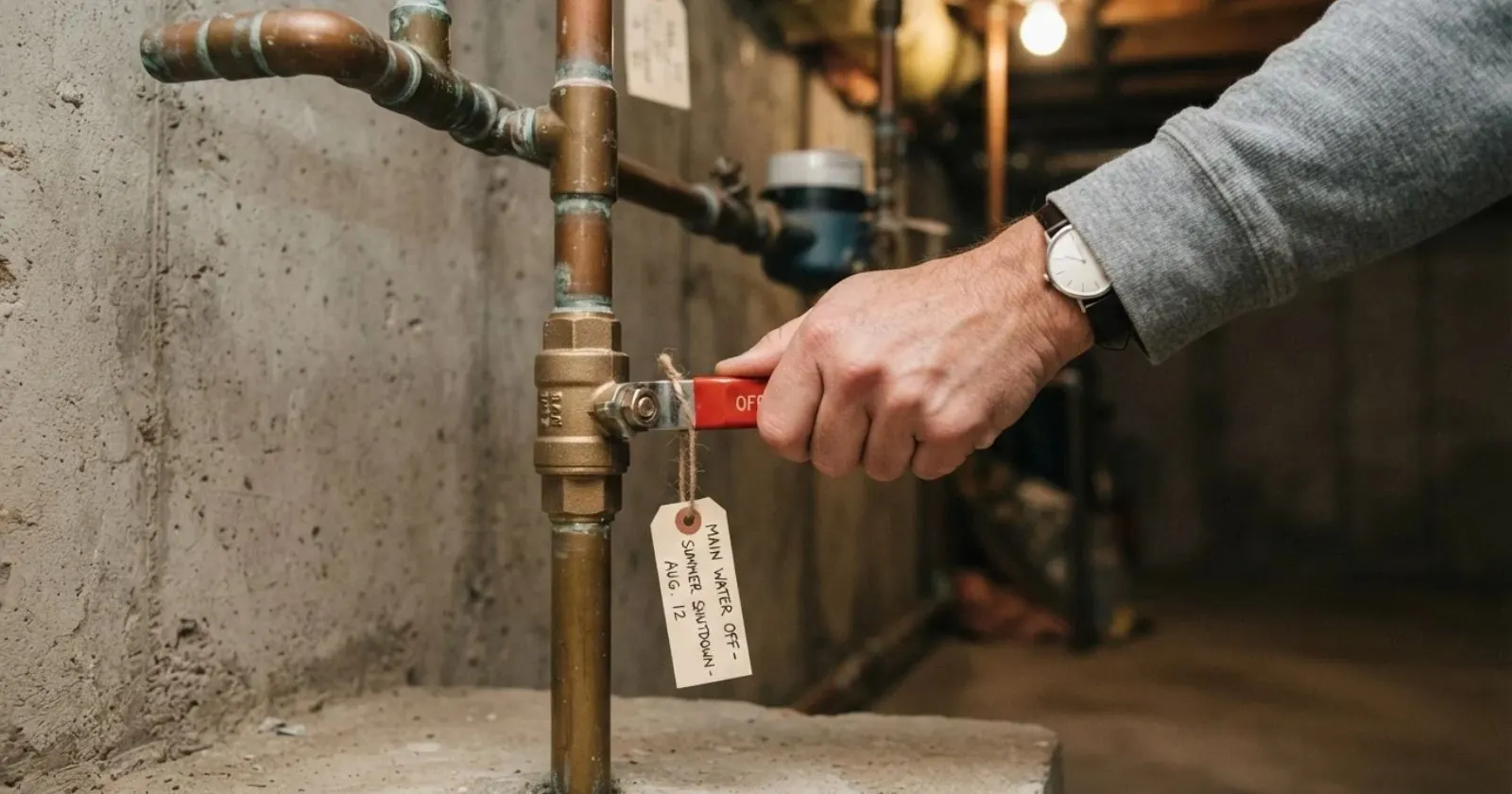
Many Surprise homeowners, especially in active adult communities like Sun City Grand, spend the hottest months somewhere cooler. Closing up a house for several months takes some planning, and plumbing deserves a place near the top of the list.
The risks are simple. A supply line or valve that fails in an empty house can release water for days or weeks before anyone notices. Meanwhile, drain traps can dry out in the heat, letting sewer gas and insects into the home. A short checklist handles both.
A week or two before you leave
- Check every toilet for running or refilling, and fix any worn flappers.
- Look under sinks for drips or damp cabinet floors.
- Replace any old washing machine hoses, especially rubber ones, with braided stainless.
- Look at the water heater for rust or dampness at the base.
- Test your main shutoff valve so you know it turns and closes fully.
- Make sure the irrigation controller is on the schedule you want while you are gone.
If a valve is stiff or drips when you turn it, or the water heater is showing its age, have it handled before you leave. Our plumbing repair service covers valves, supply lines, and toilet parts.
The day you leave
- Turn off the ice maker and empty the ice bin.
- Turn off the water supply to the washing machine.
- Set the water heater to vacation mode, or turn a gas unit to pilot and switch off the breaker to an electric one.
- Close the main water shutoff to the house.
- Open a faucet briefly to relieve pressure, then close it.
- Run a little water into every sink, tub, and shower drain, then add a small amount of mineral oil to slow evaporation.
- Close toilet lids.
The irrigation question
Here is a detail that catches many owners. In a lot of Arizona homes, the irrigation line branches off the water supply before the house shutoff valve. That means you can close the house main and still water your landscaping, which is usually what you want.
In other homes, the irrigation is fed from after the house shutoff, so closing the main also stops the landscape water. Before you leave, close the house main and run an irrigation zone. If it still waters, your setup separates the two. If it does not, talk with a plumber about adding a separate shutoff so you can close the house and keep the yard alive.
Why the water heater matters
A water heater sitting full and hot in an empty house wastes energy for months. Vacation mode or pilot keeps it from heating water no one uses. It also means that if something does go wrong, less hot water is in play.
If your heater is more than 10 years old, consider the risk of it failing while you are away. A tank that lets go in an empty house empties onto the garage floor, and the supply keeps refilling it unless the main is off. Closing the main protects you, but planning a replacement for an aging tank before summer is even better.
Dry traps and odors
Every drain has a trap, a curved section of pipe that holds water to block sewer gas. The IPC requires one on every fixture for exactly this reason. In a hot, empty house, that water evaporates over the summer. Once a trap dries out, odors and insects can come up through the drain.
Running water into every drain before you leave and topping it with a spoonful of mineral oil slows evaporation. Do not forget seldom-used spots such as a guest shower, a floor drain, or a laundry sink.
Arrange a check-in
Ask a neighbor, friend, or property service to walk through the house every couple of weeks, and again after any major monsoon storm. They should look for water on floors, stains on ceilings, a musty smell, and any sign of a leak at the water heater or under sinks.
| Task | Before you leave | While you are gone |
|---|---|---|
| Main water valve | Close it | Leave closed unless someone needs water. |
| Water heater | Vacation mode or pilot | No action needed |
| Irrigation | Confirm it runs with the main closed. | Check plants and look for leaks. |
| Drains | Fill traps and add mineral oil. | Run water if the house smells. |
| House walk-through | Check for leaks | Every couple of weeks and after storms. |
Coming back in the fall
- Open the main water valve slowly, and listen for running water with fixtures off.
- Watch the meter for a few minutes to confirm nothing is leaking.
- Run each faucet and shower for a minute to flush stagnant water.
- Flush every toilet and check that it refills and stops.
- Return the water heater to its normal setting and confirm hot water.
- Turn the ice maker back on and discard the first few batches of ice.
If the meter keeps moving after everything is closed, or you find a stain or damp spot that was not there before, call before the problem grows. Hidden leaks are easier to find early, and leak detection locates them without opening walls on a guess.
If the home has a pool
Closing the house main may shut off the pool autofill too, depending on how it is plumbed. A pool can lose a lot of water to evaporation over a Surprise summer, and a pool that drops too low can starve the pump. Arrange for a pool service or neighbor to check the level, and confirm before you leave whether your autofill still works with the main closed.
Softeners and filtration systems
A water softener does not need to run while no one is home. Many owners bypass it using the valve on the unit so it does not regenerate on an empty house. Under-sink reverse osmosis systems can be shut off at their supply valve. When you return, run water through both for a few minutes before drinking from them.
Smart shutoff valves
Some owners install an automatic shutoff valve on the main line. These devices watch water flow and close the valve when they detect a leak or unusual use, and many send an alert to your phone. For a home that sits empty for months, they add a second layer of protection on top of a closed main.
If you rent the home while you are away
Some owners rent their home during the months they are gone. In that case the water stays on, and the checklist changes. Give tenants or the property manager clear instructions on where the main shutoff is, how to turn off the water heater, and who to call for a leak. Leave the plumber's number somewhere easy to find, such as inside a kitchen cabinet door.
This checklist matters just as much in Sun City West, where many owners also leave for the hottest months.
The one step that matters most
If you only do one thing, close the main water valve. It turns a potential flood into a non-event. Everything else on this list helps, but a closed main is the single most effective protection for a house that will sit empty through a Surprise summer.
Need a plumber in Surprise?
Want your plumbing checked before you leave for the season? Call to book a visit.
Call (623) 301-9042