Water Filtration Installation in Surprise, AZ
Under-sink reverse osmosis, whole-home carbon filters, and sediment and well systems, chosen from what is actually in your water. Estimates for new systems are free.
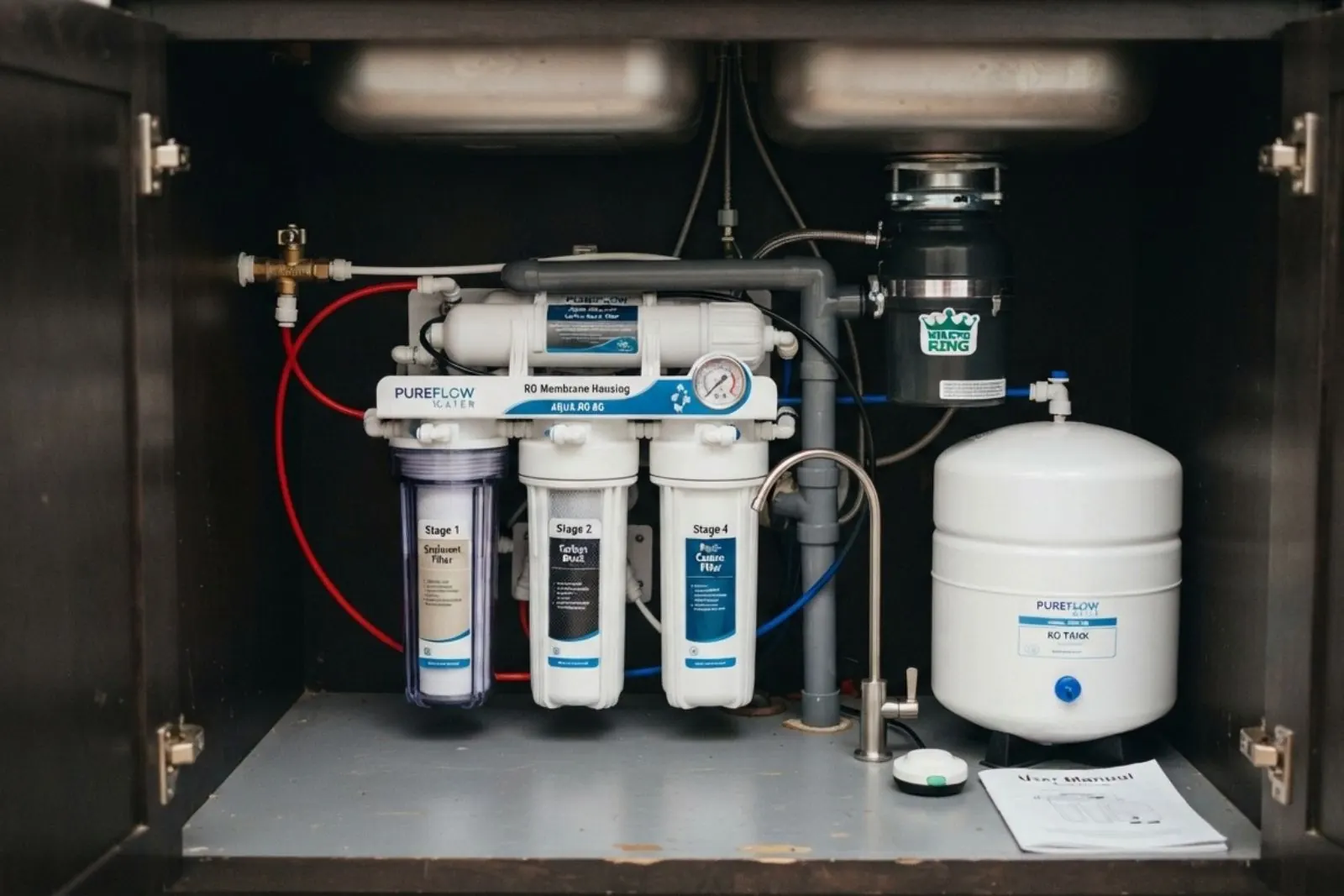
Water filtration chosen from what is in your water
Water filtration installation is fitting a system that removes or reduces specific things from your water, such as chlorine taste, sediment, or dissolved solids. The right system depends on what you want gone, which is why the process starts with your supplier's water quality report and a test at the tap.
In Surprise, both EPCOR and the city put out yearly reports for their systems. Those reports show what the utility found and treated for, which narrows the choices before anyone suggests equipment.
Filtration and softening are different jobs. A softener removes hardness minerals. A filter handles taste, odor, and a range of other contaminants. Many homes end up with both, each doing its own part.
Private wells become more common as you leave the city toward the White Tank Mountains and the rural edge of Maricopa County. Inside Surprise, near Bell Road or Loop 303, homes are on utility water, which changes which filter makes sense.
Types of filtration systems
Each type solves a different problem. Buying the wrong one wastes money and space.
Under-sink reverse osmosis
A reverse osmosis system pushes water through a very fine membrane and removes a large share of dissolved solids. It feeds a separate faucet at the kitchen sink for drinking and cooking.
It sends some water to the drain as part of the process, and the membrane and pre-filters need replacing on a schedule.
Best for
Drinking and cooking water
Certified under NSF/ANSI 58 for reverse osmosis systems.
Whole-home carbon filtration
A carbon filter at the main line treats every tap in the house for chlorine taste and odor. It improves shower and laundry water as well as drinking water.
Carbon does not remove hardness, so it pairs with a softener in hard-water homes.
Best for
Chlorine taste and smell everywhere
Look for NSF/ANSI 42 for aesthetic claims like taste and odor.
Sediment and well-water systems
Private wells can carry sand, grit, and other particles that clog fixtures. A sediment filter catches them before they reach the plumbing.
Well owners often need a combination of sediment filtration and other treatment chosen from a lab test.
Best for
Rural homes on private wells
Well water is the owner's to test, since utility reports do not cover it.
Private wells are your responsibility to test
Rural properties west and north of Surprise sometimes draw from private wells. The EPA's public drinking water standards apply to utilities, not private wells, so testing is up to the owner.
A certified lab test is the right first step. It tells you what the well actually has, so the treatment system answers a real problem rather than a guess.
What to do before you buy a filter
These steps keep you from paying for treatment you do not need.
- Read your water quality report. Your supplier's annual report lists what was found in the source and treated water.
- Test at your tap. Plumbing inside the home can change water quality, so a tap test fills in the gaps.
- Name the problem. Taste, odor, spots, or a specific contaminant each points to a different system.
- Check certifications. NSF/ANSI 42, 53, and 58 cover taste and odor, health-related contaminants, and reverse osmosis.
- Plan for upkeep. Every filter needs cartridge or membrane changes. Ask about the schedule and cost before installing.
What sets the price of a filtration system
New systems come with a free quote after the water is tested.
| Cost factor | How it moves the price |
|---|---|
| Type of system | An under-sink RO unit costs less than a whole-home system. |
| Plumbing changes | Adding a dedicated faucet or bypass loop adds labor. |
| Drain and power | RO units need a drain connection, and some systems need an outlet. |
| Pairing with a softener | Installing both at once is more efficient than two separate visits. |
| Ongoing filters | Replacement cartridges and membranes are a recurring cost to budget for. |
Insurance and filtration equipment
Insurance does not pay for filtration equipment. A leaking filter housing that soaks the cabinet floor is a different matter, and some policies treat that as sudden damage.
Want a system matched to your water? Call (623) 301-9042 to set up a test and a free quote.
Water filtration questions in Surprise
Not necessarily. Utility water meets public drinking water standards. A filter makes sense if you dislike the taste or smell, want less dissolved solids for drinking, or are on a private well.
A softener removes hardness minerals that cause scale. A filter removes things that affect taste, odor, or health. They solve different problems and are often installed together.
For drinking and cooking water, many households think so. It removes a large share of dissolved solids but wastes some water and needs regular filter and membrane changes.
It varies by system and water use. Sediment and carbon pre-filters are often changed several times more often than an RO membrane. Follow the maker's schedule.
Look for NSF/ANSI 42 for taste and odor, 53 for health-related contaminants, and 58 for reverse osmosis systems. Certification means the claims were independently tested.
A certified lab test is the right way to check a well. Once you have results, a system can be matched to them.
Related services
Hardness is handled separately by a water softener installed from a tap test. If a filter change leads to low pressure at every fixture, a general plumbing repair visit can check the valves and pressure regulator.
Well owners on the rural edge, including Waddell properties, often need sediment filtration first.
Want better-tasting water?
Call to set up a water test and a free filtration quote.
Call (623) 301-9042