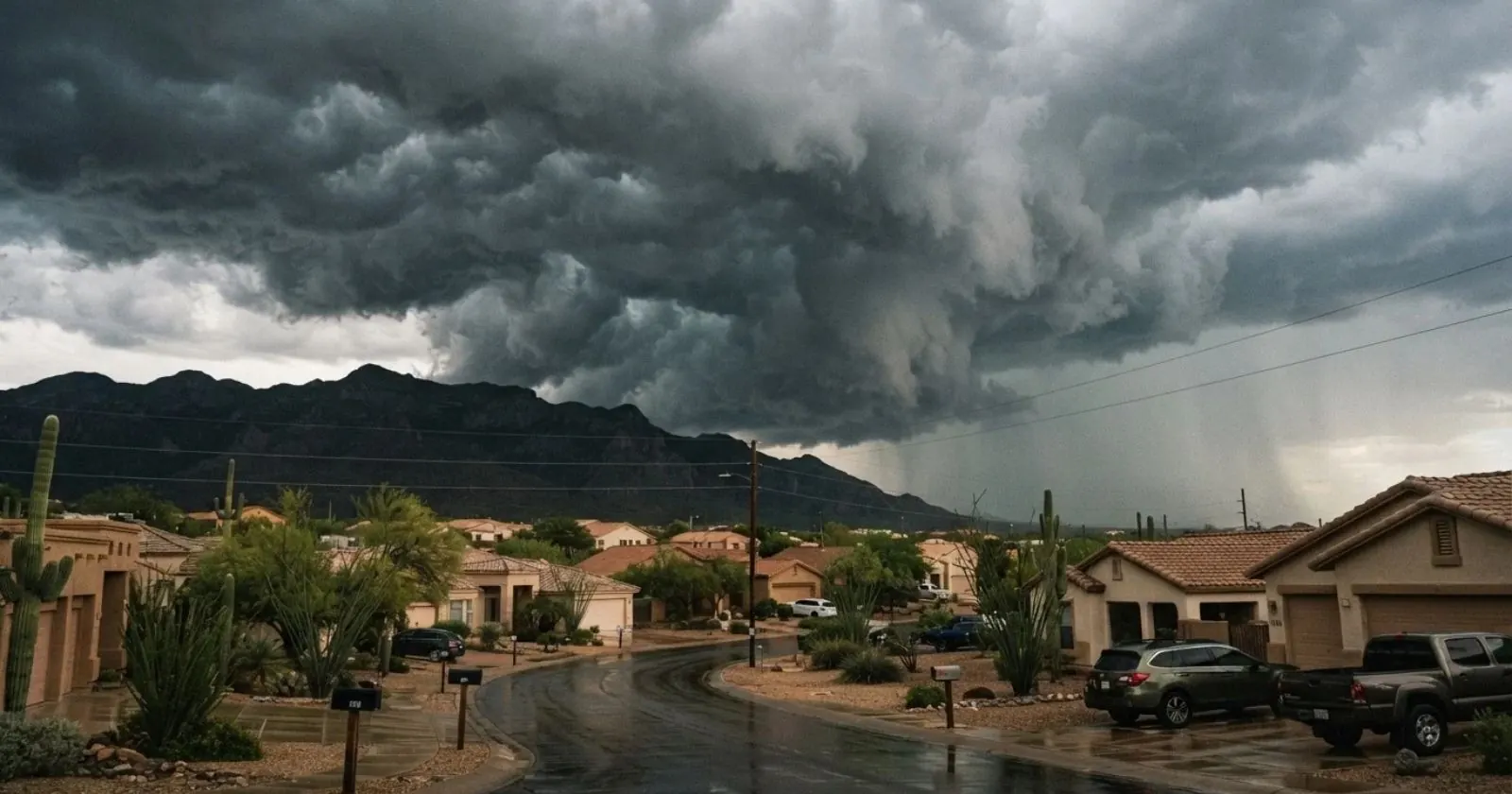
According to the National Weather Service, Arizona's monsoon season runs from June 15 through September 30. Most of the real action in the West Valley comes in July and August, when afternoon storms build fast, drop heavy rain for a short time, and push blowing dust ahead of them.
In a well-built home, storm water runs off the roof, across the yard, and into the street or a retention basin. It is not supposed to enter your drains or sewer line at all. When it does, it usually finds a way in through a handful of weak spots that are easy to check before the season starts.
Storm water and sewer are separate systems
In Surprise, storm drains and sanitary sewer lines are separate. Rain that runs into a street gutter goes to storm drains and retention areas, not to the pipes that carry waste from your house. That separation is why a monsoon storm does not normally cause a sewage backup.
Problems start when storm water gets into the sanitary side anyway. That can happen through a damaged cleanout cap, a low yard drain tied into the wrong line, or cracks in an older sewer lateral. Once extra water enters a line that was sized only for household waste, a partial clog that was not causing trouble can suddenly become a backup.
The weak spots to check
- Sewer cleanout caps. The capped pipe near the front of the house is a direct opening into your sewer line. A cracked, missing, or buried cap can let yard water pour straight in.
- Low spots near the cleanout. If water pools around it after rain, the cap is under water during every storm.
- Yard and patio drains. These should run to daylight or a dry well, not into the sewer.
- Roof drains and scuppers. Water that dumps next to the foundation can find its way to cleanouts and into the soil around the lateral.
- Garage floor drains, where they exist, which may or may not connect to the sewer.
A pre-monsoon checklist
- Find your sewer cleanout and confirm the cap is present, intact, and screwed down.
- Clear gravel, dirt, and plants away from it so it is easy to reach in an emergency.
- Walk the yard during the next irrigation cycle and note where water pools.
- Clean roof gutters and scuppers so water discharges away from the house.
- Make sure downspouts and scuppers point toward the yard or street, not toward the foundation.
- If drains have been slow, have the main line cleared before the season rather than during a storm.
Why a slow drain matters more in July
A main sewer line that is partly blocked by grease or roots may drain well enough on a normal day. Add storm water seeping in through a bad cap, or heavy household use while everyone is home during a storm, and the line cannot keep up. Water then backs up at the lowest drain in the house, usually a shower or tub on the ground floor.
That is why the best monsoon prep is often a clear main line. If your drains gurgle, your toilets bubble when the washer drains, or you have had a backup in the past year, clearing the line with main line drain cleaning before the season is cheap insurance.
Roots and the heat
Landscape trees and shrubs work hard to find water in summer. A sewer lateral with even a small gap at a joint gives off moisture that roots can follow. Summer is when root intrusion often gets worse, and a line that was fine in spring can start clogging by August.
If a line keeps backing up after being cleared, a camera inspection shows whether roots, a crack, or a sag is the real cause. Repeated root problems usually mean the joint needs a repair, which is covered on our sewer line repair page.
What to do if water backs up during a storm
- Stop running water in the house. No flushing, laundry, dishwashing, or showers.
- Keep people and pets away from any water that came up through a drain.
- If you can safely reach the exterior cleanout, loosen the cap slowly and stand back. Releasing pressure outside can stop water from rising inside.
- Photograph the water and any damage before cleanup.
- Call for help. A backup during a storm is an emergency, and the line is answered around the clock.
Water that comes up from a sewer drain is contaminated. Wear gloves, keep it off your skin, and do not use household fans to dry the area until it has been cleaned.
Air conditioner condensate lines
Monsoon humidity makes air conditioners pull more water out of the air. That water drains through a condensate line, which may empty outside, into a drain, or into a small pump. Dust from the storms that come before the rain can clog these lines, and a blocked line can overflow the drain pan and leak into a ceiling or closet.
If you notice water around the indoor air handler or a stain on the ceiling below an attic unit during monsoon season, check whether the condensate line is flowing. It is a simple clog in many cases, but it can look like a plumbing leak at first glance.
After the storm
Once the backup is cleared, find out why it happened. A cracked cleanout cap is a five-minute fix. A root-damaged lateral is a bigger one. Either way, knowing the cause keeps the next storm from ending the same way.
If storm water got inside the house through doors, windows, or the roof rather than the drains, that is a water damage cleanup job rather than a plumbing repair. The drying and cleanup process is laid out on our water damage restoration page.
Flooded yards and septic systems
Homes on septic around Waddell and Wittmann face a different monsoon risk. Heavy rain can saturate the soil over the drain field so it cannot absorb effluent for a while. Drains may slow down after a big storm even though the tank is not full.
If that happens, cut water use for a day or two and let the soil dry. Keep storm runoff pointed away from the tank and drain field. If slow drains continue after the ground has dried, the tank may need pumping.
Storm runoff off the White Tank Mountains adds another layer of risk for homes in Waddell, especially on acreage lots with septic systems.
The short version
- Find and fix your sewer cleanout cap before July.
- Keep roof water and yard water pointed away from the house and cleanouts.
- Clear a slow main line before the season, not during a storm.
- Stop using water immediately if a drain backs up.
- Treat sewage water as contaminated and document everything.
A few minutes in the yard in June can save a messy evening in August. Most monsoon plumbing problems start with a small opening that is easy to find and easy to close.
Need a plumber in Surprise?
Drain backing up during a storm? Call any hour and we will help you stop it.
Call (623) 301-9042