Septic Tank Pumping in Surprise, AZ
Pumping and service for septic systems on rural lots around Surprise, where city sewer does not reach. Backups and alarms are answered 24/7.
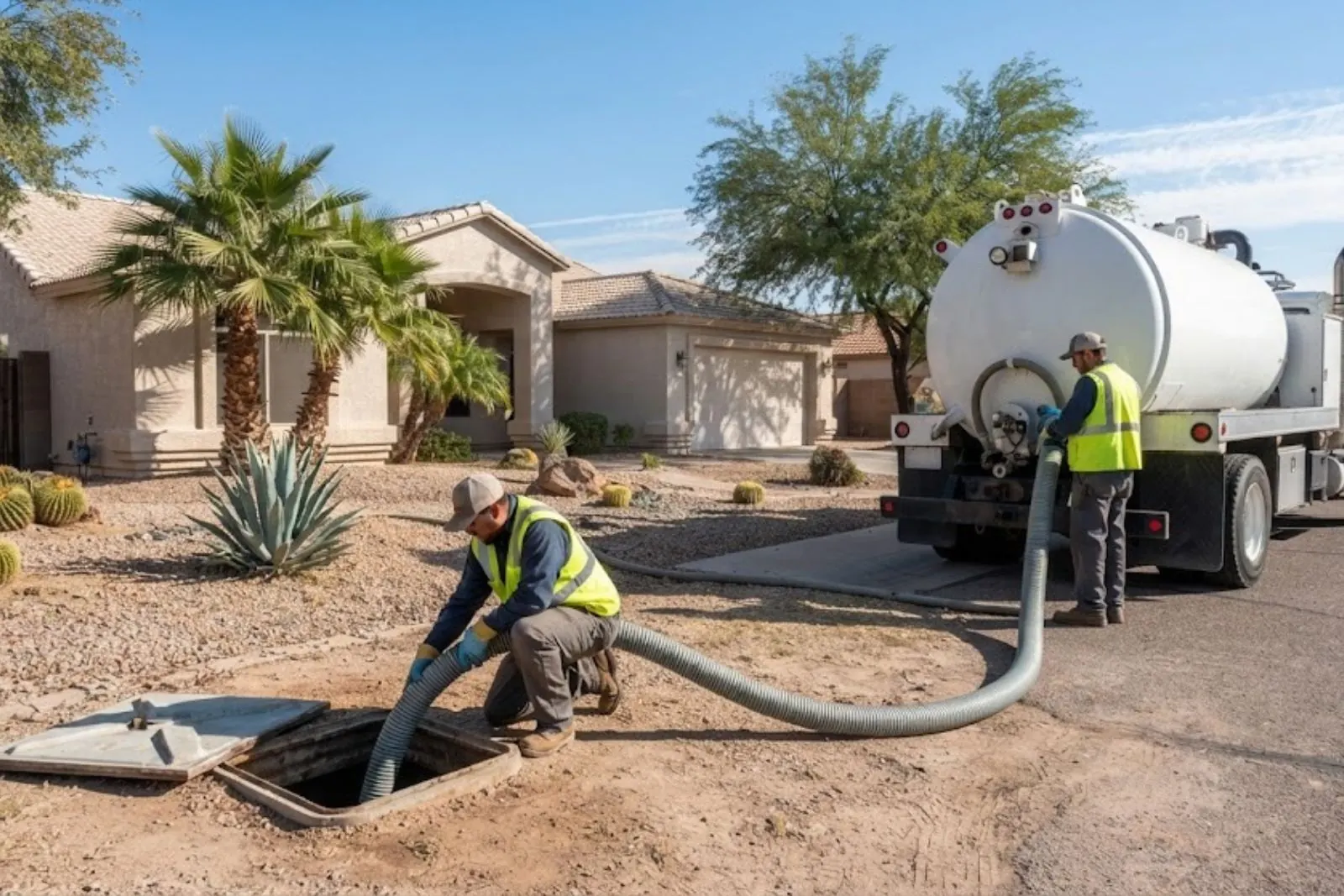
Septic service for properties beyond the city sewer
Septic tank pumping is the removal of the solids and scum that build up in a septic tank, so the tank can keep separating waste before liquid flows out to the drain field. Most of Surprise is on city sewer, but rural and unincorporated lots around it often rely on septic.
Those properties sit mainly to the west and north, in areas like Waddell and Wittmann, where large lots and distance from sewer mains make on-site systems the norm. Some of those homes also run private wells.
A septic system that is pumped on schedule can work for decades. One that is ignored eventually pushes solids into the drain field, which is the most expensive part to replace.
How often to pump a septic tank
Pumping frequency depends on how much waste goes in and how big the tank is. Use this as a starting point.
| Household | Common starting interval | What shortens it |
|---|---|---|
| 1 to 2 people | About every 4 to 5 years. | Heavy garbage disposal use |
| 3 to 4 people | About every 3 to 4 years. | Frequent laundry and long showers. |
| 5 or more people | About every 2 to 3 years. | Guests, events, and extra occupants. |
A pumping contractor can measure sludge and scum levels and give a better interval for your tank.
Signs a septic system needs attention now
These point to a full tank or a struggling drain field.
- Slow drains throughout the house. Every fixture draining slowly at once is a classic full-tank sign.
- Gurgling from drains or toilets. Air being pushed back through the plumbing means the system is backing up.
- Sewage odor outside. A smell near the tank or drain field is not normal.
- Wet or unusually green ground. Soggy soil or a lush patch over the drain field can mean effluent is surfacing.
- A system alarm. Systems with pumps have alarms that signal high water. Treat an alarm as urgent.
Selling or buying a home on septic in Arizona
According to Arizona Department of Environmental Quality rules, a conventional septic system must be inspected when a property changes hands. The inspection is done before the sale by a qualified inspector, and the tank is typically pumped as part of it so the inspector can see its condition.
Buyers of rural lots around Surprise should ask for that report and the tank's pumping history. It tells you how the system has been treated and whether repairs are coming.
In unincorporated areas, Maricopa County Environmental Services handles septic permits. New systems, major repairs, and some replacements go through the county rather than the city.
Septic is mostly a rural question here. Inside Surprise, homes near Bell Road and Grand Avenue are on sewer and buy water from EPCOR or the City of Surprise, while lots farther out toward the White Tank Mountains and Wittmann handle their own waste on site.
Protecting a septic system between pumpings
Keep grease, wipes, and harsh chemicals out of the drains. Wipes labeled flushable do not break down in a tank, and heavy bleach use can upset the bacteria that do the work.
Spread out laundry loads, fix running toilets quickly, and keep vehicles and heavy equipment off the drain field. Each of those small habits adds years between problems.
What affects the cost of septic pumping
Pump-outs are quoted by tank size and access when you book.
| Cost factor | How it moves the price |
|---|---|
| Tank size | Larger tanks take longer and cost more to pump. |
| Access to the lid | A buried lid needs digging to expose it. A riser makes future pumping quicker. |
| Distance | Remote rural lots add travel time. |
| Emergency timing | Weekend and overnight backups are billed above a planned pump-out. |
| Inspection needs | A transfer inspection adds a report on top of the pumping. |
Insurance and septic systems
Insurance rarely pays for pumping or routine septic maintenance. Sudden damage may be treated differently from a slow failure, so read your policy.
Want to schedule a pump-out? Call (623) 301-9042 with the tank size if you know it.
Septic questions for rural Surprise-area properties
Most homes inside Surprise city limits are on city sewer. If you receive a city sewer bill, you are on sewer. Rural and unincorporated lots are more likely to have septic.
Every 3 to 5 years is a common range, depending on household size, tank size, and use. A pumping contractor can measure the sludge level to set a better schedule.
Arizona requires an inspection of a conventional septic system when the property is transferred. It is done by a qualified inspector before the sale.
Cut water use right away, check that the pump breaker has not tripped, and call. An alarm usually means water is rising higher than it should.
A healthy system does not need them. Regular pumping and keeping grease, wipes, and harsh chemicals out do far more.
Yes. The tank can be located from the house sewer line, and adding a riser makes the lid easy to reach next time.
Related services and areas
Backups that turn out to be in the pipe between the house and the tank need main line drain cleaning instead. Homes on private wells often pair septic care with water filtration for the supply side.
Septic calls come mostly from the rural edge of the area, especially around Wittmann and Waddell.
Septic backing up or due for pumping?
Call to schedule a pump-out, or use the 24/7 line for a backup.
Call (623) 301-9042